

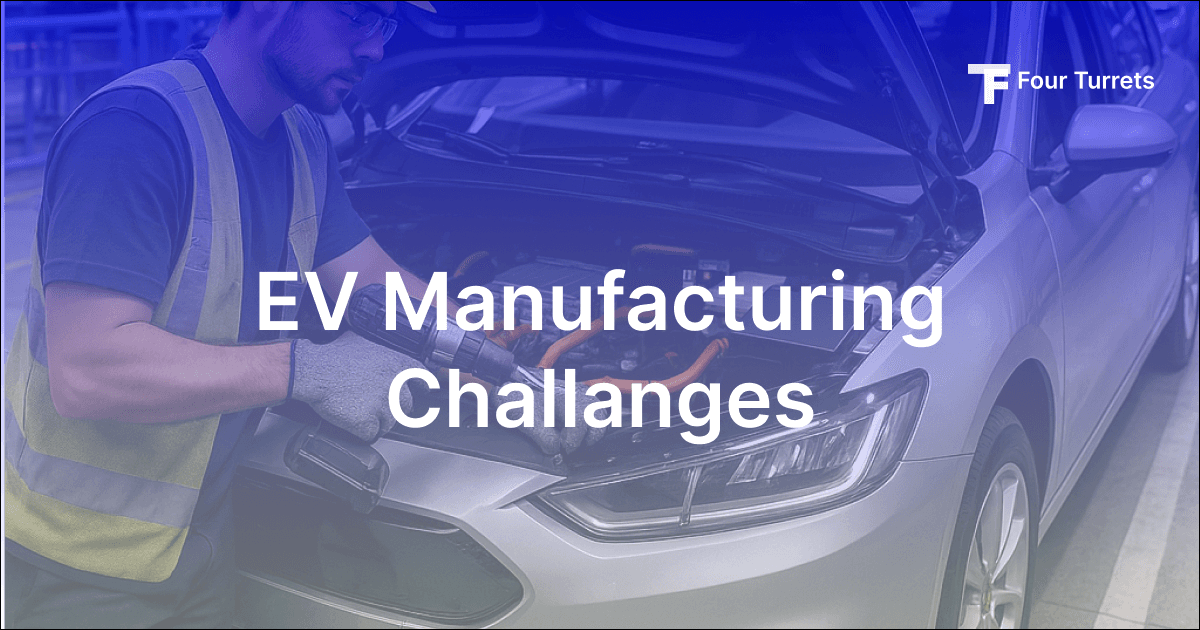
The global shift from traditional ICE vehicles to EV market is accelerating, but manufacturing electric vehicles (EVs) presents a unique set of challenges. As the EV industry races toward electrification, automakers and suppliers must navigate complex hurdles in EV manufacturing, battery technology, supply chain logistics, and infrastructure development. In this article, we’ll explore the core challenges facing new EV production and how the industry is working to overcome them.
Let’s start with basics from why EV manufacturers started generating demand for their electric models and how electric vehicle manufacturing became so mainstream.
The Rise of EV Manufacturing
With the introduction of EV models in the vehicle market, the automobile industry is undergoing a seismic transformation as manufacturers pivot from traditional internal combustion engine (ICE) vehicles to electric motor. This electrification trend is driven by environmental concerns, regulatory mandates, and consumer demand for sustainable mobility. However, manufacturing electric vehicles is far from straightforward, requiring new technologies, processes, and supply chain strategies.
EV Batteries: The Heart of Electric Vehicles
At the core of every new EV is its battery pack, typically based on lithium-ion technology. EV batteries are not only the most expensive component but also the most critical in determining vehicle range, performance, and safety. The production of these batteries involves sourcing rare minerals like lithium, cobalt, and nickel, which are subject to global supply constraints and ethical sourcing concerns.
Key Challenges:
- Raw Material Scarcity: The relative scarcity of essential minerals can disrupt battery manufacturing and increase costs.
- Sustainability: Mining and processing these materials have environmental and social implications.
- Recycling: Developing circular business models for battery reuse and recycling is essential for long-term sustainability.
Supply Chain Complexities
The EV supply chain is vastly different from that of traditional ICE vehicles. It requires new partnerships, logistics, and risk management strategies.
Major Issues:
- Global Dependencies: Many battery components are sourced from a handful of countries, making the supply chain vulnerable to geopolitical tensions and trade restrictions.
- Logistics: Transporting heavy and hazardous battery packs requires specialized handling and regulatory compliance.
- Just-in-Time Manufacturing: The need for rapid innovation in battery technology can disrupt established supply chain rhythms.
Manufacturing Facilities: Retooling for Electrification
Transitioning from ICE to EV manufacturing demands significant investment in new manufacturing facilities and retooling existing plants. Automakers must:
- Install new assembly lines for battery packs and electric drivetrains.
- Train workers in high-voltage safety and new production techniques.
- Implement advanced automation and quality control systems.
This transformation is capital-intensive and requires close collaboration with technology partners and suppliers.
Battery Manufacturing and Technology
Battery manufacturing is a rapidly evolving field, with ongoing research into improving energy density, charging speed, and safety. Innovations in solid-state batteries and alternative chemistries promise to address some current limitations, but scaling these technologies for mass production remains a challenge.
Industry Trends:
- Gigafactories: Large-scale battery manufacturing plants are being built worldwide to meet rising demand.
- Vertical Integration: Some automakers are investing directly in battery production to secure supply and control costs.
- Sustainability Initiatives: Efforts are underway to reduce the carbon footprint of battery manufacturing and increase recycling rates.
Charging Stations and Infrastructure
A robust network of charging stations is essential for widespread EV adoption. However, building this infrastructure presents its own set of challenges:
- Grid Capacity: Large-scale EV charging can strain local electricity grids.
- Standardization: Multiple charging standards and connector types complicate deployment.
- Urban vs. Rural Access: Ensuring equitable access to charging stations in all regions is a persistent issue.
With expanding network of EV charging stations, more users are now considering adopting an EV compared to their gasoline-powered vehicle.
Comparing EVs and Traditional ICE Vehicles
Manufacturing electric vehicles differs significantly from producing traditional ICE vehicles:
- Fewer Moving Parts: EVs have simpler drivetrains, reducing assembly complexity but increasing reliance on high-tech components.
- Workforce Skills: New skills are required for battery assembly, software integration, and high-voltage systems.
- Lifecycle Considerations: EVs offer lower emissions over their lifetime, but battery production and disposal present new environmental challenges.
Conclusion: The Road Ahead for EV Manufacturing
The journey toward electrification is reshaping the automotive industry. While manufacturing electric vehicles presents formidable challenges, from battery technology and supply chain management to infrastructure and workforce development—the industry is responding with innovation and collaboration. As battery technology advances and supply chains mature, the future of EV manufacturing looks increasingly promising.
What are the biggest challenges in EV manufacturing?
The main challenges include battery technology, supply chain vulnerabilities, retooling manufacturing facilities, and building charging infrastructure.
How does EV manufacturing differ from traditional ICE vehicle production?
EVs require fewer moving parts but more advanced electronics and battery systems, necessitating new skills and processes.
Why is battery manufacturing so critical for the EV industry?
Batteries determine the range, cost, and performance of EVs, and their production relies on scarce raw materials and advanced technology.
What is being done to address supply chain issues in EV manufacturing?
Automakers are investing in vertical integration, diversifying suppliers, and supporting recycling initiatives to secure critical materials.
How important is charging infrastructure for EV adoption?
Extremely important—without widespread, reliable charging stations, consumer adoption of EVs will be limited.